Legal Issues
Is homeschooling legal? Which laws pertain to homeschoolers and which don't? How do homeschoolers protect their rights to freely educate their children and to preserve their privacy?
Political and Legal Support for Homeschoolers in Arkansas
Alliance for the Separation of School & State
An advisory group concerned with educating people about the need to eliminate government involvement in education and the rights of parents to educate their own children. On this site, you will find a public proclamation for the separation of school and state, which you can sign.
National Charter School Watch List
This list is created to be a means of informing, documenting and evaluating available information concerning the impact of virtual/charter schools on the homeschooling community. This information consists of and is not limited to news items, articles from various sources, legislative information (bills, law changes), documented efforts and experiences and other information that may give weight to whether home-based charter schools or virtual schools are having an impact in any negative way on homeschooling.
ARkansas HOMe Educators (ARHOME)
ARkansas HOMe Educators (ARHOME) is for Arkansas homeschoolers to share information about homeschooling and about legislation in Arkansas that affects homeschooling.
Legal Issues Affecting the Homeschool Community
How to Suppress Homeschooling
The education establishment has realized that the socialization issue will be seen for the red herring that it is, and has searched for other means to suppress homeschooling. Two new strategies have emerged, and these pose real threats to homeschooling. The first strategy is to argue that homeschooling needs some form of accreditation. A number of reasons have been offered: it eases the transition back to the public school for those homeschoolers who go back, it is the basis for awarding a recognized diploma, and it makes it easier to provide homeschoolers access to public school programs and facilities such as science classes, libraries, sports, etc. But accreditation is simply another word for conforming, and the desire to not conform is the fundamental reason for choosing to homeschool. Homeschoolers as a group will not be seduced nor will they be tricked by the false promises of accreditation.
The second strategy for suppressing homeschooling is one that is much more likely to be successful, and it is to drastically limit homeschoolers’ access to public higher education. In this, the education establishment has discovered its only effective weapon against homeschooling.
The Seduction of Homeschooling Families
Do the public school authorities feel threatened by homeschooling? Judging by their efforts to lure homeschooling families into dependence on local school districts, the answer is apparently yes.
Political Influence
Every important movement or trend in this country was followed by an onslaught of legislative actions which resulted in some legal stipulations that controlled the trend. What is really of concern is that this legislative control is not static, but very fluid, subject to change (meaning more restrictions in many cases). These changes occur through either more legislative actions on the part of the government or through interpretation in the judicial system. Currently, the homeschool movement is being closely monitored by various teacher unions, the public and legislative bodies throughout the United States, resulting in more and more laws being passed to control or monitor the movement. If the homeschool movement is to survive in a manner which we feel would be beneficial to us and society as a whole, we have to be more and more diligent in protecting our rights. The only way we can do this is to be more active in the political process. The question now becomes, how do we do this?
Homeschooling Litigation: Preparing the Way
The greatest obstacle pioneering homeschoolers faced two decades ago was daunting: in most states home education wasn't legal. This article details five of the most significant cases that have become landmark decisions in the move towards homeschooling freedoms: the DeJonge case in Michigan, the Jeffery case in Pennsylvania, the Diegel case in Ohio, the Triple E case in South Carolina, and the Calabretta case in California.
On Jumping Through Hoops
Most books and articles on home education are quick to point out that homeschooling is legal--in one form or another-- in all fifty states. Parents might have to jump through more hoops in one state than in another, but, as long as they're willing to jump through those hoops, they are allowed to teach their own children at home. But are these hoops actually necessary?
Battling for the Heart and Soul of Home-Schoolers
A look at the battle for the homeschooling movement and the demographics of homeschooling families that challenges the notion that all homeschoolers are conservative fundamentalists. This article is a critical look at the HSLDA.
HSLDA's Position on Tax Credits Generally
Although a credit or deduction could be helpful for homeschoolers, HSLDA opposes any tax break legislation that could come with governmental regulations. Homeschoolers have fought far too long and much too hard to throw off the chains of government regulation that hinder effective education and interfere with liberty. It would be inconsistent and foolhardy to accept tax incentives in exchange for government regulation. However, HSLDA supports tax credits that promote educational choice without threatening any regulation of homeschoolers. - See more at: http://nche.hslda.org/docs/nche/000010/200504150.asp#sthash.tvLv2ItR.dpuf
The Seduction of Homeschooling Families
Do the public school authorities feel threatened by homeschooling? Judging by their efforts to lure homeschooling families into dependence on local school districts, the answer is apparently yes. For the last several years, homeschooling has been the fastest growing educational alternative in the country. The sheer number of homeschoolers represent a distinct threat to the hegemony of the government school monopoly. Qualitatively, the academic success of homeschoolers, measured by standardized test scores and recruitment by colleges, debunk the myth that parents need to hire credentialed experts to force children to learn.
Social Security's New Home School Flow Chart
For some years, the Social Security Administration has permitted home schoolers to receive benefits in some cases. The agency used a fuzzy test involving several different factors. New documents from the Social Security Administration indicate that the agency has a much better defined policy in place now.
Safeguarding Home Education Freedoms at the Local Level
While many parents may not have the opportunity to influence legislation regarding home education on the state level, there are ways to be involved on a local level.
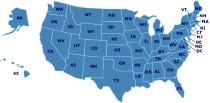
Looking for Another State?
Featured Resources
As an Amazon Associate, we earn from qualifying purchases. We get commissions for purchases made through links on this site.

Safe Young Drivers: A Guide for Parents and Teens
Sixteen is by far the most dangerous age on the road. A 16-year-old is twelve times more likely than older drivers to die in a crash as a single occupant. Put two young teens in a vehicle, and the odds of death and injury nearly double. Despite these sobering facts, the procedure for obtaining a driver’s license in most states remains minimal. Commercial driving schools, even the most competent and conscientious among them, cannot possibly provide complete instruction. This book helps to address...

The Unschooling Handbook : How to Use the Whole World As Your Child's Classroom
Unschooling, a homeschooling method based on the belief that kids learn best when allowed to pursue their natural curiosities and interests, is practiced by 10 to 15 percent of the estimated 1.5 million homeschoolers in the United States. There is no curriculum or master plan for allowing children to decide when, what, and how they will learn, but veteran homeschooler Mary Griffith comes as close as you can get in this slim manual. Written in a conversational, salon-style manner, The Unschooling...

Responsible Driving, Student Edition
This easy-to-read book features explanations of safe driving techniques and is used in many states as a textbook for in-class driving instruction. It is a great learning tool for a new driver and a good refresher for the more experienced driver.

Homeschooling on a Shoestring : A Jam-packed Guide
So you want to homeschool but don't think you can afford it. This book is a compendium of ideas for the family that wants to start or continue homeschooling on a tight budget.
Includes ideas for making money as a stay-at-home mom, sources for inexpensive curriculum, affordable teaching tools, and ideas for low-cost field trips. Also discusses ways to run your household more efficiently and with less cost.

The Living Page: Keeping Notebooks with Charlotte Mason
Charlotte Mason believed that children need to be trained to see, to have their eyes opened, in order to find joy in life. This work explains the value of using the method of writing in journals or notebooks, as derived from the expansive work of Charlotte Mason. You'll find tips to help your children practice putting their knowledge, thoughts, and pictures down on paper, helping them to retain information better, create something beautiful, and strive for retention.